During the week of May 2, Jefferson County Public Schools (JCPS) celebrated the 137th Kentucky Derby with nutritious versions of traditional Kentucky dishes as part of Michelle Obama’s Chefs Move to Schools initiative. Sullivan University chef instructors Cynthia Chandler and Katie Payne developed four recipes for light versions of popular regional foods, and JCPS students enjoyed the meals while learning about healthy eating habits.
The dishes developed for the JCPS were Derby Burgoo, Spring Fruit with yogurt mint sauce, Pimento Cheese and Country Ham Accent Wraps and Chocolate Mint Brownies. Some of the modifications used to make these items healthier included using apple sauce to sweeten the brownies, including extra vegetables and lean meats in the burgoo and using whole grain tortillas and canola mayonnaise in the wraps.
Visit www.sullivan.edu.
Showing posts with label recipes. Show all posts
Wednesday, June 8, 2011
Monday, May 23, 2011
Kraft Foodservice awards $10,000 in scholarships in the Future Chefs of GREY POUPON Student Culinary Competition at The Culinary Institute of America
Kraft Foodservice awarded $10,000 in scholarship money to four students at The Culinary Institute of America (CIA) at Hyde Park during the Future Chefs of GREY POUPON Student Culinary Competition held at the culinary school’s campus on April 4. Thitid Tassanakajohn received the first-place prize of a $5,000 scholarship for his recipe, Blossom Tempura Club Sandwich with Classic Dijon Mustard Emulsion, Grilled Pork Belly and Sliced Ribeye Steak. As the first-place winner, in addition to his $5,000 scholarship, Thitid also has the chance to be featured in a Kraft Foodservice trade advertisement.
Students were asked to take the concept of a traditional club sandwich to a new level and develop exciting and unique recipes. Additionally, each recipe had to highlight GREY POUPON Classic Dijon or GREY POUPON Country Dijon Mustard as the featured ingredient.
Thitid’s Blossom Tempura Club Sandwich recipe impressed the judges with its creative use of GREY POUPON in a mustard emulsion that worked well with both the grilled pork belly and ribeye steak on the sandwich. Born in Bangkok, Thailand, Thitid’s culinary creations and aspirations are heavily influenced by his heritage. Armed with an M.B.A in hospitality management, Thitid wants to introduce a new level of Thai food to the world and eventually open his own fine dining Thai restaurant after attending the culinary college.
Recipes developed by the other student finalists who were also awarded scholarship prizes were these: Seared Prosciutto Sandwich with Mustard Infused L’Orly Onion Rings, the second-place recipe by José Frayre for which he was awarded $3,000; Lobster Schnitzel and Arugula Club on Hazelnut Bread with Mascarpone Mustard Sauce, Tomato Baked Fontina Dip and Dijon Potato Salad, for which Brooke Maynard was awarded third place and $1,000; and GREY POUPON Dijon Mustard Pretzel Club, which earned Eric Hollandsworth fourth place and $1,000.
The judges for the competition were chef Phil Crispo, assistant professor in culinary arts at The Culinary Institute of America at Hyde Park; chef Michael Siry, culinary director of branded restaurants NYC; and Chef Ken Samuels, executive chef at Avon Pavilion. Students were judged on taste and use of GREY POUPON, along with creativity and appearance.
Recipes developed by the other student finalists who were also awarded scholarship prizes were these: Seared Prosciutto Sandwich with Mustard Infused L’Orly Onion Rings, the second-place recipe by José Frayre for which he was awarded $3,000; Lobster Schnitzel and Arugula Club on Hazelnut Bread with Mascarpone Mustard Sauce, Tomato Baked Fontina Dip and Dijon Potato Salad, for which Brooke Maynard was awarded third place and $1,000; and GREY POUPON Dijon Mustard Pretzel Club, which earned Eric Hollandsworth fourth place and $1,000.
The judges for the competition were chef Phil Crispo, assistant professor in culinary arts at The Culinary Institute of America at Hyde Park; chef Michael Siry, culinary director of branded restaurants NYC; and Chef Ken Samuels, executive chef at Avon Pavilion. Students were judged on taste and use of GREY POUPON, along with creativity and appearance.
Visit kraftfoodservice.com.
Friday, April 22, 2011
Maple Leaf Farms 2011 Professional and Student Chefs' Recipe Contest
The Maple Leaf Farms 2011 Chef Recipe Contest kicks off May 2. Now professional and student chefs' recipes will be judged in two separate categories, each with their own grand prize (see below for details).
Innovative, easy recipes using Maple Leaf Farms duck will be judged using these criteria:
- Simplicity
- Originality
- Accuracy of recipe
- Flavor
Chefs may enter up to 3 recipes in one category. Entries will be accepted online or by mail beginning May 2. Read official contest rules here.
Prizes will be offered in these two categories: - Professional Chefs: Grand prize - $5,000; Second place prize - $3,000; and Third place prize - $1,500
- Student Chefs: Grand Prize - $3000; and Student Second Prize - $1500
Monday, March 28, 2011
Menu idea gallery launched for chef-developed potato dishes
Every year, chefs from leading foodservice and retail chains meet at the Culinary Institute of America in Napa Valley to engage in some friendly competition and creativity with potatoes. This year, the U.S. Potato Board has collected those ideas in a photo-gallery to help chefs in all foodservice channels spark their own creativity.
The ideas photographed for the Idea Gallery were generated by 14 of the top minds in the industry who represent over 8,800 units and $3 billion in annual sales. The ideas demonstrate some of today’s hottest trends and are available to help any chef capitalize on the versatility and profitability of potatoes.
For more information and to see the idea gallery, visit http://www.potatogoodness.com/ foodService/ideaGallery.php.
Thursday, March 17, 2011
Honey Culinary Instruction Kit now available as a free download
The National Honey Board’s popular Honey Culinary Instruction Kit (introduced in 2009 as a CD-ROM) is now available as a free download at www.honey.com. Culinary educators and other interested foodservice professionals can access the comprehensive information tool on the Foodservice page at www.honey.com, under “Free Culinary CDs.” After providing basic contact information, visitors simply indicate if they wish to download the kit or receive it as a CD via mail.
The National Honey Board developed the culinary curriculum to share the benefits of honey – as a food, an ingredient and a marketing tool – with student and professional culinarians. An advanced classroom teaching guide is divided into four learning blocks: Life of the Hive; Ingredient Functionality; Varietal Honeys; and Tasting Workshop with Culinary Applications. A PowerPoint presentation emphasizes key learning points, and an appendix offers additional honey information, references and resources.Culinarians who pass the comprehensive exam (also included in the kit) qualify for 3.5 American Culinary Federation continuing education credits. Culinary educators, students and foodservice professionals can download their free copy of the Honey Culinary Instruction Kit today at www.honey.com.
Wednesday, March 16, 2011
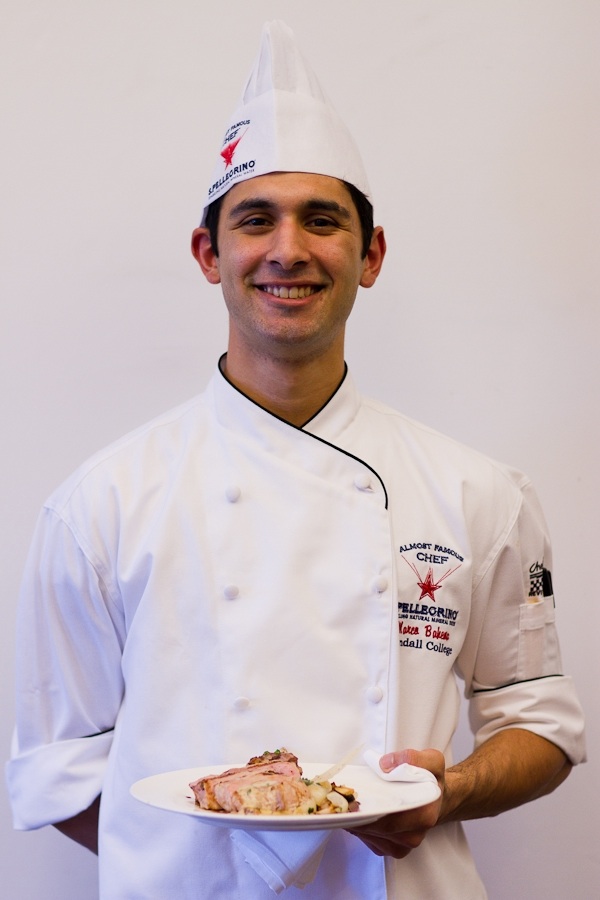
Marco Bahena of Kendall College named winner of 9th annual S.Pellegrino Almost Famous Chef Competition
On March 13th, Marco Bahena, of Kendall College, was named the winner of the 9TH annual S.Pellegrino Almost Famous Chef Competition at the finals event held at The Culinary Institute of America at Greystone in Napa Valley, Calif. A celebrity panel of judges awarded the top prize to Marco for his signature dish.
![]() |
| Marco Bahena with his winning dish |
The event was hosted by Gail Simmons, Food & Wine special projects director and Bravo's “Top Chef” judge and host, and Ralph Pagano, the executive chef at STK Miami, finalist from “Hell’s Kitchen,” season one, and host of the internationally broadcast travel show, “Pressure Cook.”
Judging the three days of competition were a panel of celebrity chefs and media: chefs Michel Richard of Citronelle, Rick Moonen of rm Seafood, Tony Mantuano of Spiaggia, Jean Joho of Everest, Gary Danko of Gary Danko Restaurant, Brooke McDougall of ByMark Restaurant and Napa’s own, Bob Hurley. The chefs were joined by an elite group of media: Dana Cowin of Food & Wine magazine, Sophie Gayot of Gayot.com, Mitchell Davis of The James Beard Foundation and Bonnie Stern of The National Post.
![]() |
| Marco with judge Ralph Pagano |
Marco’s prizes included a $10,000 cash prize for winning as well as $3,000 for his winning signature dish of Mediterranean Lamb Loin, a year-long paid apprenticeship with a participating chef judge of his choice and the title of 2011 S. Pellegrino Almost Famous Chef.
In addition to vying for the top prize, the 10 competitors also competed in a Mystery Basket Competition and were voted on by fans and attendees for the People’s Choice and Acqua Panna Fan Favorite Awards. Marco won the $3,000 Signature Dish prize for his recipe, Mediterranean Lamb Loin. Jean-François Daigle of The George Brown Chef's School won the Mystery Basket competition, earning him $3,000, for a dish he created with the surprise ingredients featuring pork loin. Elizabeth Freer from the Culinary Institute of Charleston won the People’s Choice Award, taking away $3,000 for her signature dish, Rabbit Two Ways: Pecan and Spice Encrusted Rabbit Tenderloin with Sweet Braised Rabbit Ravioli and a Baby Spinach, Radicchio Sauté. And Emma Louth from Drexel University scored $3,000 for wowing the online audience with her dish.
“I am thrilled to be named the winner, especially by this amazing panel of judges,” said Marco Bahena. “Not only was it an incredible experience competing against nine really talented competitors, but to be able to cook in one of the most prestigious kitchens in the world and be mentored by such a talented group of chef and media judges for the weekend – I couldn’t have asked for a better jump-start to my career.”
![]() |
| Marco in action |
For more information on the competition and to view Marco’s biography and winning recipe, visit www.almostfamouschef.com, www.thesparklinglife.com, become a fan on Facebook (www.facebook.com/ almostfamouschef) or follow the competition on Twitter at AFChefComp.
Labels:
awards,
contests,
industry events,
news,
recaps,
recipes,
scholarships
Wednesday, March 9, 2011
Calling all culinary students: InsPEARational recipe competition now accepting entries
All entries will be judged based on prominent use of fresh USA Pears, originality, creativity, taste/texture, and appearance. Three semi-finalists will receive an all-expense paid trip to Portland, Oregon to prepare their dish for a panel of professional judges. Grand prize is $2,500 cash for the student, plus the student’s culinary department will receive $250 for supplies or scholarship fund. Second place winners will receive $1,000 cash and third place, $500 cash.
The goal of the contest is to reward future culinary professionals for their creativity and demonstrate the versatility of fresh pears across all menu and day parts. The 2010 winner, Keith Paugh of The Texas Culinary Academy was chosen for his savory “Pear and Scallops” creation.
For more information, visit www.usapears.org.
Thursday, February 17, 2011
Culinary contest to celebrate National Cherry Month
February is National Cherry Month, and the Cherry Marketing Institute is calling all culinary enthusiasts – professionals, students and novices alike – to celebrate the versatility, taste and year-round availability of this powerful fruit by sharing an original tart cherry recipe in the first-ever Powered by Red Recipe Contest, which started on February 1.
Three grand prize winners (one per category: professional, student and consumer) will win $500, a set of high-performance cookware in cherry red, and professional photography of their winning recipe!
The contest closes February 20, and the winners will be notified by March 1. Visit www.choosecherries.com for more details.
Friday, May 7, 2010
Mignonette Trio recipe, featuring petite tender
Editors' note: This recipe accompanies "Versatile beef" (page 15) in the Summer issue of Chef Educator Today.
Mignonette Trio
Pan-roasted petite tender sliders with Port-Red Onion Relish and Blue Cheese Butter
Dave Zino, executive chef, National Cattlemen's Beef Association
Yield: 24 servings
72 4" diameter artisan rustic white dinner rolls
2 c. extra virgin olive oil
15 petite tenders*
Salt and pepper, to taste
1 c. canola oil
Port-Red Onion Relish (recipe follows)
Blue Cheese Butter (recipe follows)
15 bunches chives, cut the diameter of the rolls
Method (1) Using a 2.5" round pastry cutter or ring mold, press out circles from the rolls (you may need to use a paring knife to trace around the ring mold to pierce through the top crust). Then slice through the middle, making little hamburger buns. (2) In a large nonstick pan, heat 2 oz. olive oil over medium heat, and place the buns in the pan so that the insides of the buns are in contact with the pan. Cook until that side is crisp and golden, about 90 seconds. Remove to a paper towel-lined plate. Repeat until all buns have been toasted. (3) Season petite tenders with salt and pepper, and pan roast with a little canola oil to desired doneness. Slice them all 1/8" thick. (4) Spread 1 heaping T. Port-Red Onion Relish on the bottom half of each roll. Place 2 slices of beef on each. Spread 1 T. Blue Cheese Butter on the toasted side of the tops, then affix chives to the Blue Cheese Butter, making sure to keep them all pointing in the same direction. Assemble sandwich. Line three on each rectangle plate, and serve.
Port-Red Onion Relish
1 t. canola oil
6 c. red onion, brunoise
2 fl. oz. rice vinegar
3 bottles (750 mL each) ruby port wine, of good quality
1/2 c. sugar
Method (1) Heat oil in a sauce pot over medium heat. Add onion, and sweat about 1 minute. (2) Add vinegar, and sweat 1 minute more until color is bled from the onions. Add port and sugar. Bring to a boil then reduce heat as low as it will go, and reduce until syrupy, about 2 hours. (3) Once it cools, this will tighten up dramatically. It is easier to err on the thick side and then thin it out with water once it has cooled down, rather than not reducing it enough and then having to reheat it later to reduce it further.
Blue Cheese Butter
1 lb. Blue d'Auvergne, room temperature
1/2 lb. butter, unsalted, softened
1/2 c. chives, minced
1 t. salt
Method (1) Mix all ingredients in a large bowl with a rubber spatula, making sure to totally incorporate the butter. Bring to room temperature before serving.
* The petite tender is a tender, juicy muscle that rests on the beef shoulder near the top blade. It is versatile and upscale like beef tenderloin or filet mignon, but at check prices.
Mignonette TrioPan-roasted petite tender sliders with Port-Red Onion Relish and Blue Cheese Butter
Dave Zino, executive chef, National Cattlemen's Beef Association
Yield: 24 servings
72 4" diameter artisan rustic white dinner rolls
2 c. extra virgin olive oil
15 petite tenders*
Salt and pepper, to taste
1 c. canola oil
Port-Red Onion Relish (recipe follows)
Blue Cheese Butter (recipe follows)
15 bunches chives, cut the diameter of the rolls
Method (1) Using a 2.5" round pastry cutter or ring mold, press out circles from the rolls (you may need to use a paring knife to trace around the ring mold to pierce through the top crust). Then slice through the middle, making little hamburger buns. (2) In a large nonstick pan, heat 2 oz. olive oil over medium heat, and place the buns in the pan so that the insides of the buns are in contact with the pan. Cook until that side is crisp and golden, about 90 seconds. Remove to a paper towel-lined plate. Repeat until all buns have been toasted. (3) Season petite tenders with salt and pepper, and pan roast with a little canola oil to desired doneness. Slice them all 1/8" thick. (4) Spread 1 heaping T. Port-Red Onion Relish on the bottom half of each roll. Place 2 slices of beef on each. Spread 1 T. Blue Cheese Butter on the toasted side of the tops, then affix chives to the Blue Cheese Butter, making sure to keep them all pointing in the same direction. Assemble sandwich. Line three on each rectangle plate, and serve.
Port-Red Onion Relish
1 t. canola oil
6 c. red onion, brunoise
2 fl. oz. rice vinegar
3 bottles (750 mL each) ruby port wine, of good quality
1/2 c. sugar
Method (1) Heat oil in a sauce pot over medium heat. Add onion, and sweat about 1 minute. (2) Add vinegar, and sweat 1 minute more until color is bled from the onions. Add port and sugar. Bring to a boil then reduce heat as low as it will go, and reduce until syrupy, about 2 hours. (3) Once it cools, this will tighten up dramatically. It is easier to err on the thick side and then thin it out with water once it has cooled down, rather than not reducing it enough and then having to reheat it later to reduce it further.
Blue Cheese Butter
1 lb. Blue d'Auvergne, room temperature
1/2 lb. butter, unsalted, softened
1/2 c. chives, minced
1 t. salt
Method (1) Mix all ingredients in a large bowl with a rubber spatula, making sure to totally incorporate the butter. Bring to room temperature before serving.
* The petite tender is a tender, juicy muscle that rests on the beef shoulder near the top blade. It is versatile and upscale like beef tenderloin or filet mignon, but at check prices.
Thursday, May 6, 2010
Chai truffles recipe
Editors' note: This recipe was mentioned in the "Smooth as Ganache" article (page 21) of the Summer issue of Chef Educator Today.
Batch size: 25.5 oz. (730 g.)
0.5 oz. (10 g.) chai tea blend*
1 vanilla bean, scraped
6 oz. (180 g.) heavy cream
Milk, as needed
2 oz. (60 g.) glucose syrup
16 oz. (460 g.) milk chocolate, tempered, chopped and unmelted
1 oz. (20 g.) softened butter
Cocoa powder, for rolling
Tempered milk or dark chocolate, as needed for finishing
Method (1) Place tea, vanilla bean and heavy cream in pot and bring to a simmer. Remove from heat, cover and let steep for 5 minutes or until desired flavor. (2) Strain mixture through chinois or cheesecloth. Squeeze tea mixture to extract maximum flavors. (3) Re-scale mixture, and add milk to attain the cream original weight. (4) Add glucose syrup to the mixture, and bring to a simmer. (5) Pour hot mixture over chopped chocolate. (6) Stir from center of mixture outward, in circles, or use immersion blender until mixture blends. (7) Before adding butter, ensure mixture is thoroughly blended and emulsified. (8) Add softened butter into ganache, making sure no butter lumps remain. (9) Pour ganache into a hotel pan, and cover directly with plastic wrap to ensure no skin forms on the chocolate. (10) Cool at room temperature until slightly firm. (11) Pipe or scoop truffle balls. Allow to crystallize at room temperature until firm enough to handle. (12) Roll truffles by hand into round balls, using cocoa powder on your hands if to sticky. (13) Dip rolled balls into tempered milk or dark chocolate.
* Substitute other tea or tisanes (dried fruits, flowers and spices) to flavor your ganache.
Jenny Lewis, C.C.E., C.H.E, chef-instructor, Lexington College, Chicago
Batch size: 25.5 oz. (730 g.)
0.5 oz. (10 g.) chai tea blend*
1 vanilla bean, scraped
6 oz. (180 g.) heavy cream
Milk, as needed
2 oz. (60 g.) glucose syrup
16 oz. (460 g.) milk chocolate, tempered, chopped and unmelted
1 oz. (20 g.) softened butter
Cocoa powder, for rolling
Tempered milk or dark chocolate, as needed for finishing
Method (1) Place tea, vanilla bean and heavy cream in pot and bring to a simmer. Remove from heat, cover and let steep for 5 minutes or until desired flavor. (2) Strain mixture through chinois or cheesecloth. Squeeze tea mixture to extract maximum flavors. (3) Re-scale mixture, and add milk to attain the cream original weight. (4) Add glucose syrup to the mixture, and bring to a simmer. (5) Pour hot mixture over chopped chocolate. (6) Stir from center of mixture outward, in circles, or use immersion blender until mixture blends. (7) Before adding butter, ensure mixture is thoroughly blended and emulsified. (8) Add softened butter into ganache, making sure no butter lumps remain. (9) Pour ganache into a hotel pan, and cover directly with plastic wrap to ensure no skin forms on the chocolate. (10) Cool at room temperature until slightly firm. (11) Pipe or scoop truffle balls. Allow to crystallize at room temperature until firm enough to handle. (12) Roll truffles by hand into round balls, using cocoa powder on your hands if to sticky. (13) Dip rolled balls into tempered milk or dark chocolate.
* Substitute other tea or tisanes (dried fruits, flowers and spices) to flavor your ganache.
Tuesday, May 4, 2010
Deconstructed fruit and yogurt recipe
Editors' note: This recipe accompanies "The avant-garde kitchen" (page 20) of the Summer issue of Chef Educator Today.
1,000 g. water
50 g. sugar
5 g. sodium alginate
7 g. calcium lactate
225 g. fruit purée
225 g. yogurt
zest of half a lemon
Granola (recipe follows)
Method (1) Bring the water to a boil with the sugar. Place 800 g. of the water/sugar mix in to a blender. Reserve the remaining 100 g. simple syrup for the fruit and yogurt preps. With the blender running, gradually sprinkle in the sodium alginate. Strain the mix through a chinois, and add the remaining water/sugar solution. Let the mix rest for 30 minutes to settle and clear. (2) For the fruit, heat 50 g. simple syrup, and add the calcium lactate. Stir into the fruit purée. (3) For the yogurt, mix together remaining 50 g. simple syrup with yogurt and lemon zest. (4) To make caviar, simply take tablespoons of the fruit and yogurt mixture, and tip into the prepared alginate bath. Let them "cook" for 1-2 minutes before removing, then rinse in room-temperature water. The spheres can be held for service in simple syrup, juice or diluted purée. (5) To serve, plate fruit and yogurt caviar on top of Granola, and serve with a sauce if desired.
Granola
140 g. rolled oats
100 g. almonds, coarsely chopped
50 g. walnuts, coarsely chopped
1/2 t. cinnamon
1/4 t. ginger
1/4 t. salt
50 g. apple butter
40 g. maple syrup
1/2 T. walnut oil
Method (1) Combine all the ingredients to coat. (2) Bake on a sheet pan at 350°F, stirring occasionally until golden and toasted. Cool before using.
1,000 g. water
50 g. sugar
5 g. sodium alginate
7 g. calcium lactate
225 g. fruit purée
225 g. yogurt
zest of half a lemon
Granola (recipe follows)
Method (1) Bring the water to a boil with the sugar. Place 800 g. of the water/sugar mix in to a blender. Reserve the remaining 100 g. simple syrup for the fruit and yogurt preps. With the blender running, gradually sprinkle in the sodium alginate. Strain the mix through a chinois, and add the remaining water/sugar solution. Let the mix rest for 30 minutes to settle and clear. (2) For the fruit, heat 50 g. simple syrup, and add the calcium lactate. Stir into the fruit purée. (3) For the yogurt, mix together remaining 50 g. simple syrup with yogurt and lemon zest. (4) To make caviar, simply take tablespoons of the fruit and yogurt mixture, and tip into the prepared alginate bath. Let them "cook" for 1-2 minutes before removing, then rinse in room-temperature water. The spheres can be held for service in simple syrup, juice or diluted purée. (5) To serve, plate fruit and yogurt caviar on top of Granola, and serve with a sauce if desired.
Granola
140 g. rolled oats
100 g. almonds, coarsely chopped
50 g. walnuts, coarsely chopped
1/2 t. cinnamon
1/4 t. ginger
1/4 t. salt
50 g. apple butter
40 g. maple syrup
1/2 T. walnut oil
Method (1) Combine all the ingredients to coat. (2) Bake on a sheet pan at 350°F, stirring occasionally until golden and toasted. Cool before using.
Wednesday, August 26, 2009
A recipe for Sachertorte
This recipe was mentioned in the "Gâteaux versus tortes" article (page 16) of the August 2009 issue of Chef Educator Today.
Sachertorte
Jim Quinter, CWPC, Sullivan University, Louisville, Ky.
Sachertorte
Jim Quinter, CWPC, Sullivan University, Louisville, Ky.
Yield: 1 torte
5 oz. Barry Callebaut bittersweet chocolate, finely chopped
1 stick unsalted butter, at room temperature
1 c. powdered sugar
6 large eggs, separated, at room temperature
1 t. vanilla extract
1/2 c. granulated sugar
1 c. pastry flour (spoon gently into cup and level top)
Liquor and simple syrup, as needed
1 c. apricot glaze or strained jam, warmed
Chocolate glaze or ganache, warm
Method (1) Heat oven to 400°F. Grease a 9-inch springform pan, and line the bottom with parchment paper. Dust sides of pan with flour, and tap out excess. (2) Set up a double boiler over very hot water, but not simmering; melt chocolate. Remove from heat; let stand, stirring often, until cool. (3) Beat butter in bowl of a standing mixer with paddle on medium-high speed until smooth, about 1 minute. On low speed, beat in powdered sugar. Return speed to medium-high, and beat until light in color and texture, about 2 minutes. Beat in egg yolks, one at a time, scraping down sides of bowl. Beat in chocolate and vanilla. (4) In separate bowl, beat the egg whites and granulated sugar with a mixer on high speed just until they form soft, shiny peaks. Do not overbeat. Stir about 1/4 beaten whites into chocolate mixture to lighten it, then fold in remaining whites, leaving a few visible wisps of whites. Sift half of flour over chocolate mixture, and fold in with a large balloon whisk or rubber spatula. Repeat with remaining flour. (5) Spread evenly in pan, slightly spin cake pan to prevent from doming. Bake until a toothpick inserted in the center comes out clean, about 45 minutes. Cool on wire rack for 10 minutes. Remove sides of pan, and invert cake onto rack. Cool completely. (6) To assemble: Using a long serrated knife, cut cake horizontally into two equal layers. Place one cake layer on an 8-inch cardboard round. Macerate the cake with some type of liquor and simple syrup to keep the cake moist. Spread liberal amount of apricot glaze on bottom layer. Place second cake layer on top; macerate and spread more apricot glaze on top layer. Spread top and sides of cake with the remaining apricot. Transfer to wire rack placed over a jelly-roll pan lined with parchment paper. Let cool until the glaze is set (may place in the cooler until glaze is set). (7) Pour ganache to enrobe top of cake. Using a metal offset spatula, gently smooth glaze over cake, allowing it to run down sides, being sure that glaze completely coats the cake (patch any bare spots with spatula and icing that has dripped). Cool until ganache is barely set, then transfer to a serving plate. Refrigerate until the ganache is completely set, at least 1 hour. Remove cake from refrigerator about 1 hour before serving. Use any remaining ganache to write SACHER on the top center of the cake. (8) To serve, slice with a sharp knife dipped into hot water. Goes well with a fresh raspberry sauce.
Thursday, August 6, 2009
A healthy take on red velvet cake
In partnership with the American Cancer Society, the Culinary Institute of America challenged its baking and pastry students to create a healthier birthday cake as part of the American Cancer Society's More Birthdays campaign. Student Alexandra Mudry was named the winner with her healthier version of red velvet cake (recipe follows) by CIA alumnus and chef Duff Goldman along with the CIA and the American Cancer Society. Mudry's cake is now the American Cancer Society's official birthday cake.
Students submitted recipes that included an original cake recipe and a description of how the recipe used more healthful baking ingredients and substitutions to improve on the traditional birthday cake. The CIA deans evaluated the recipes and chose five finalists. The other finalists included: Arthur Battistini, runner up, Hyde Park campus; Tamara King, Hyde Park campus; Lorraine Tran, Greystone campus; and Laura Sansone, Hyde Park campus.
CIA student Alexandra Mudry poses with her winning birthday cake, a lightened-up version of red velvet cake
New Red Velvet Cake
Alexandra Mudry, student-chef, Culinary Institute of America
Students submitted recipes that included an original cake recipe and a description of how the recipe used more healthful baking ingredients and substitutions to improve on the traditional birthday cake. The CIA deans evaluated the recipes and chose five finalists. The other finalists included: Arthur Battistini, runner up, Hyde Park campus; Tamara King, Hyde Park campus; Lorraine Tran, Greystone campus; and Laura Sansone, Hyde Park campus.
CIA student Alexandra Mudry poses with her winning birthday cake, a lightened-up version of red velvet cakeNew Red Velvet Cake
Alexandra Mudry, student-chef, Culinary Institute of America
Yield: 10-12 generous servings
3 large or 5 small beets, to make 2 c. purée (if using canned beets, make sure they are unseasoned and stored in their own juices)
1/2 c. canola oil
3/4 c. all purpose flour, plus some for dusting cake pans
2 large eggs
2 large egg whites
1 c. granulated sugar
3 oz. unsweetened chocolate, melted
1 t. instant espresso powder or instant coffee
1/2 c. unsweetened cocoa powder
1/2 c. unsweetened applesauce
1 c. dried cherries
3/4 c. whole wheat flour
1/4 c. quinoa flour (if you are unable to find quinoa flour, substitute 1/4 c. all purpose flour)
1 1/2 t. baking soda
1/2 t. salt
Chocolate Raspberry Ganache (recipe follows)
Cream Cheese Frosting (recipe follows)
Method (1) Preheat oven to 375°F. Trim ends of beets, and place on a parchment paper or foil-lined baking pan. Drizzle with 1 T. canola oil. Roast until fork tender, about 2 hours. Once cooled, peel then place in blender or food processor with 1-2 T. water. Purée beets until they reach a smooth and even consistency. Set aside. The beets can be made several days ahead and stored in an airtight container in the refrigerator. (2) Preheat oven to 375°F. Spray one 9" X 14" baking pan or two 8" pans with canola oil spray, and dust with flour; discard excess flour. (3) Combine oil, eggs, egg whites and sugar in a mixing bowl. Beat on medium speed with a paddle attachment until smooth and light colored. (4) Add the espresso powder to the melted chocolate, and stir until combined. Turning the speed down to low, slowly drizzle the melted chocolate into the mixture. Once the chocolate has been added, turn off the machine, and scrape the sides of the bowl. (5) In a separate bowl, combine the cocoa powder, applesauce and beet purée. Add this mixture to the egg mixture. Place the machine on medium speed to incorporate, scrape down the sides of the bowl and then add the cherries; mix again. Remove the bowl from the mixer. (6) Sift the remaining dry ingredients together, and then gently fold into the mixture. Do not over-mix or the cake will become tough and dense. (7) Pour batter into pan(s), and bake for 40-45 minutes, until a toothpick inserted in the center comes out clean. (8) Cool, and remove from pan(s). If not using immediately, wrap in saran wrap, and refrigerate. Cake can be made a day in advance. (9) If using 9" X 14" pan, pour Raspberry Chocolate Ganache over top of cake and spread evenly. Cut the cake lengthwise down the middle, and then invert so both layers of ganache are sandwiched together. (If using an 8" pan, pour ganache on one layer and top with other cake.) Once cake is stacked, smooth sides, and fill in any gaps between the layers with ganache. Place cake in refrigerator, and chill until ganache is firm. (10) Once the cake and ganache are firm, remove from refrigerator. Frost with Cream Cheese Frosting or any other desired frosting.
Chocolate Raspberry Ganache
2 oz. heavy cream
1.5 oz. raspberry purée (or other dark berry mixture such as blackberries and blueberries, which are high in antioxidants
4 oz. good quality bittersweet chocolate, broken into small pieces
Method (1) Boil cream in a small pot. At the same time, warm raspberry purée in microwave until just warm. Once cream has boiled, add raspberry purée, and stir to combine. (2) Pour over chocolate, and stir until the chocolate is completely melted and the mixture is homogenous. If the chocolate does not melt all the way, place over a double boiler and finish melting. Set ganache aside, and allow to cool so it becomes slightly thick. This will allow for easier spreading.
Cream Cheese Frosting
24 oz. (3 packages) reduced fat cream cheese, room temperature
1 1/4 c. confectioners' sugar, sifted
2 t. vanilla extract
Method (1) Lightly beat cream cheese and vanilla extract until smooth, about 1-2 minutes. Stop machine, scrape down sides of bowl, then add confectioners' sugar. Cream together until smooth. Do not overmix or the frosting will become too soft and difficult to spread.
3 large or 5 small beets, to make 2 c. purée (if using canned beets, make sure they are unseasoned and stored in their own juices)
1/2 c. canola oil
3/4 c. all purpose flour, plus some for dusting cake pans
2 large eggs
2 large egg whites
1 c. granulated sugar
3 oz. unsweetened chocolate, melted
1 t. instant espresso powder or instant coffee
1/2 c. unsweetened cocoa powder
1/2 c. unsweetened applesauce
1 c. dried cherries
3/4 c. whole wheat flour
1/4 c. quinoa flour (if you are unable to find quinoa flour, substitute 1/4 c. all purpose flour)
1 1/2 t. baking soda
1/2 t. salt
Chocolate Raspberry Ganache (recipe follows)
Cream Cheese Frosting (recipe follows)
Method (1) Preheat oven to 375°F. Trim ends of beets, and place on a parchment paper or foil-lined baking pan. Drizzle with 1 T. canola oil. Roast until fork tender, about 2 hours. Once cooled, peel then place in blender or food processor with 1-2 T. water. Purée beets until they reach a smooth and even consistency. Set aside. The beets can be made several days ahead and stored in an airtight container in the refrigerator. (2) Preheat oven to 375°F. Spray one 9" X 14" baking pan or two 8" pans with canola oil spray, and dust with flour; discard excess flour. (3) Combine oil, eggs, egg whites and sugar in a mixing bowl. Beat on medium speed with a paddle attachment until smooth and light colored. (4) Add the espresso powder to the melted chocolate, and stir until combined. Turning the speed down to low, slowly drizzle the melted chocolate into the mixture. Once the chocolate has been added, turn off the machine, and scrape the sides of the bowl. (5) In a separate bowl, combine the cocoa powder, applesauce and beet purée. Add this mixture to the egg mixture. Place the machine on medium speed to incorporate, scrape down the sides of the bowl and then add the cherries; mix again. Remove the bowl from the mixer. (6) Sift the remaining dry ingredients together, and then gently fold into the mixture. Do not over-mix or the cake will become tough and dense. (7) Pour batter into pan(s), and bake for 40-45 minutes, until a toothpick inserted in the center comes out clean. (8) Cool, and remove from pan(s). If not using immediately, wrap in saran wrap, and refrigerate. Cake can be made a day in advance. (9) If using 9" X 14" pan, pour Raspberry Chocolate Ganache over top of cake and spread evenly. Cut the cake lengthwise down the middle, and then invert so both layers of ganache are sandwiched together. (If using an 8" pan, pour ganache on one layer and top with other cake.) Once cake is stacked, smooth sides, and fill in any gaps between the layers with ganache. Place cake in refrigerator, and chill until ganache is firm. (10) Once the cake and ganache are firm, remove from refrigerator. Frost with Cream Cheese Frosting or any other desired frosting.
Chocolate Raspberry Ganache
2 oz. heavy cream
1.5 oz. raspberry purée (or other dark berry mixture such as blackberries and blueberries, which are high in antioxidants
4 oz. good quality bittersweet chocolate, broken into small pieces
Method (1) Boil cream in a small pot. At the same time, warm raspberry purée in microwave until just warm. Once cream has boiled, add raspberry purée, and stir to combine. (2) Pour over chocolate, and stir until the chocolate is completely melted and the mixture is homogenous. If the chocolate does not melt all the way, place over a double boiler and finish melting. Set ganache aside, and allow to cool so it becomes slightly thick. This will allow for easier spreading.
Cream Cheese Frosting
24 oz. (3 packages) reduced fat cream cheese, room temperature
1 1/4 c. confectioners' sugar, sifted
2 t. vanilla extract
Method (1) Lightly beat cream cheese and vanilla extract until smooth, about 1-2 minutes. Stop machine, scrape down sides of bowl, then add confectioners' sugar. Cream together until smooth. Do not overmix or the frosting will become too soft and difficult to spread.
Monday, July 27, 2009
Okanagan College student wins Florida Tomato recipe contest
David Colombe, a culinary student at Okanagan College in Vernon British Columbia, was the grand prize winner in the 20th annual Florida Tomato Committee's Best of the Best recipe contest held at food marketing and communications agency Lewis & Neale in New York City. A panel of chefs and food writers selected Colombe's Fire Roasted Florida Tomato Gumbo (recipe below) as the best, winning him the $2,000 first prize.
(the judging panel from l to r): chef Rob Bleifer, Food Network; chef Deirdre Devoy, Restaurant Associates; Reggie Brown, Florida Tomato Committee; Samantha Winters, Florida Tomato Comittee; Gary Tucker, Food Arts; Pat Cobe, Restaurant Business; and Jason Stemm, Lewis & Neale
For more information, visit www.floridatomatoes.org.

(the judging panel from l to r): chef Rob Bleifer, Food Network; chef Deirdre Devoy, Restaurant Associates; Reggie Brown, Florida Tomato Committee; Samantha Winters, Florida Tomato Comittee; Gary Tucker, Food Arts; Pat Cobe, Restaurant Business; and Jason Stemm, Lewis & NealeFor more information, visit www.floridatomatoes.org.

Fire Roasted Florida Tomato Gumbo
David Colombe, student-chef, Okanagan College, www.okanagan.bc.ca/home.html
Yield: 6 portions (10 cups)
2 1/2 lbs. fully ripened Florida tomatoes
2 T. butter
1/2 c. andouille sausage, coarsely chopped
1/2 c. onion, coarsely chopped
1/2 c. carrot, coarsely chopped
1/3 c. celery, coarsely chopped
2 t. garlic, finely chopped
3 T. all-purpose flour
3 c. chicken stock
3 T. tomato paste
2 t. sugar
1 t. fresh rosemary, chopped
1/2 t. salt
1/2 t. cayenne pepper (optional)
1/4 t. ground white pepper
1 c. cooked converted white rice
1 c. heavy cream
1/4 c. croutons and rosemary sprigs, for garnish
Method (1) Set grill or broiler rack about 4 in. from heat source; preheat. Core tomatoes; place on grill or in roasting pan under the broiler. Cook, turning once, until skin blackens, about 30-40 minutes. (2) In medium saucepan, melt the butter; add sausage, onion, carrot, celery and garlic. Cook, stirring occasionally, until vegetables just begin to brown, about 5 minutes. Reduce heat to low. Sprinkle flour over the vegetables; cook and stir until flour begins to brown, 3-5 minutes. (3) In a blender or food processor, coarsely chop grilled tomatoes; add to vegetables in saucepan. Stir in the stock, tomato paste, sugar, rosemary, salt, red pepper and white pepper. Simmer 15 minutes, partially covered. (4) Add rice and cream; cook until just hot. Spoon into soup plates, dividing equally. Garnish with croutons and rosemary sprigs, if desired.
2 1/2 lbs. fully ripened Florida tomatoes
2 T. butter
1/2 c. andouille sausage, coarsely chopped
1/2 c. onion, coarsely chopped
1/2 c. carrot, coarsely chopped
1/3 c. celery, coarsely chopped
2 t. garlic, finely chopped
3 T. all-purpose flour
3 c. chicken stock
3 T. tomato paste
2 t. sugar
1 t. fresh rosemary, chopped
1/2 t. salt
1/2 t. cayenne pepper (optional)
1/4 t. ground white pepper
1 c. cooked converted white rice
1 c. heavy cream
1/4 c. croutons and rosemary sprigs, for garnish
Method (1) Set grill or broiler rack about 4 in. from heat source; preheat. Core tomatoes; place on grill or in roasting pan under the broiler. Cook, turning once, until skin blackens, about 30-40 minutes. (2) In medium saucepan, melt the butter; add sausage, onion, carrot, celery and garlic. Cook, stirring occasionally, until vegetables just begin to brown, about 5 minutes. Reduce heat to low. Sprinkle flour over the vegetables; cook and stir until flour begins to brown, 3-5 minutes. (3) In a blender or food processor, coarsely chop grilled tomatoes; add to vegetables in saucepan. Stir in the stock, tomato paste, sugar, rosemary, salt, red pepper and white pepper. Simmer 15 minutes, partially covered. (4) Add rice and cream; cook until just hot. Spoon into soup plates, dividing equally. Garnish with croutons and rosemary sprigs, if desired.
Friday, July 24, 2009
Monroe College culinary students compete in Frito-Lay recipe contest
Monroe College Culinary Arts students in New Rochelle, N.Y., rose to a new “Pepsi Challenge” by using PepsiCo’s Frito-Lay snack products as key ingredients in casual-dining recipes for a recent contest. Competing for prize money, students chose from from among six different Frito-Lay chip products to create new variations for breading, toppings, stuffing and more.First-place winner, Christine Gonzalez--a sophomore and December 2009 candidate for an associate's degree in Culinary Arts--was awarded a $500 prize for her recipe: Catfish Fingers coated in Original Frito-Lay Kettle Chips and dipped in chipotle aïoli (recipe follows). A second-place prize of $300 was awarded to Rosanne Peña, also a December 2009 candidate for an associate's degree in Culinary Arts, for her recipe for Frito-Lay Southwestern Fish Sliders: tilapia pieces cut from filets and seasoned with an assortment of ingredients, including beer, and then lightly coated in finely crushed Frito-Lay Original Corn Chips. Kareem David, a December 2009 candidate for a bachelor’s degree in Hospitality Management, won third place and $200 for his Smoked Corn and Shrimp Fritter: shrimp breaded with Frito-Lay’s Thick Cut Tortilla Rounds and served with mango ketchup.
The competition was judged by guest-chefs from area restaurants and foodservice organizations including Michael Salvatore, executive chef, Sysco Food Services of Metro New York; Lee Tremble, owner, Iron Horse Inn, Westwood, N.J.; Jonathan Moosmiller, executive chef, Westchester Country Club; Michael Hofer, owner, SmokeHouse Chili-Grill, New Rochelle; and Jay Bigman, senior zone manager for PepsiCo. Monroe College dean of Hospitality Management and the Culinary Arts Frank C. Costantino and chef-instructor Tracy Zimmermann also served as judges. (Judges pictured with students above.)
Frito-Lay Catfish Fingers with Chipotle Aïoli Sauce
Christine Gonzalez, sophomore, Monroe College, New Rochelle, N.Y.
Yield: 12
3 lbs. catfish filet
12 c. Frito-Lay Kettle Cooked Potato Chips
4 eggs
4 T. Florida Bay Seasoning
Salt and pepper, to taste
1/2 c. dark beer
6 c. all purpose flour
Chipotle Aïoli Sauce
Method (1) Cut filets into 2 1/2" pieces. (2) Season fish with Florida Bay Seasoning, salt and pepper. (3) Beat eggs; add dark beer to mixture. (4) Grind potato chips coarsely. (5) Coat fish in flour, then egg/beer mixture and finally potato chips. (6) Deep fry coated catfish pieces in 350°F vegetable oil for 2-3 minutes, until golden brown and cooked through. Serve with Chipotle Aïoli Sauce.
Chipotle Aïoli Sauce
4 c. mayonnaise
4 T. cilantro, chiffonade
6 chipotle peppers
1 T. lemon juice
Method (1) Combine mayonnaise, cilantro, chipotle peppers and lemon juice; chill well. Reserve.
Wednesday, May 27, 2009
ICE student wins Fiddlehead Culinary Competition
Boswell Scott, a student at the Institute of Culinary Education in New York City, took first place in NorCliff Farms Inc.'s Second Annual Fiddlehead Greens Culinary Contest. Students and two-year graduates had until May 6 to submit recipes online that incorporated fresh or frozen fiddlehead greens.
Scott prepared his winning recipe for sautéed coconut curry fiddleheads and chicken (recipe follows) at a Fiddlehead Festival on May 13.
Yield: 4 servings
3 T. olive oil
4 T. curry powder, divided
8 oz. fresh NorCliff fiddlehead greens or 10 oz. frozen fiddlehead greens
Half an onion, chopped
2 cloves garlic, minced
1 1/2 oz. carrots, julienned
4 T. sweetened coconut flakes
4 boneless chicken breasts, cut into thick julienne
Salt and pepper, to taste
Method (1) In a large saucepan, heat oil. While heating, add 2 t. of curry powder to hot oil. (2) When the oil is heated, turn down the heat to medium-high, add chicken and cook for 2 minutes. (3) When the chicken is perfectly seared and has taken on the color of the curry (yellowish green), add fiddleheads, onion, garlic and carrots. (4) Add the rest of the curry powder and sweetened coconut flakes, stir well and cook for an additional 2 minutes. Finish off with salt and pepper to taste. Serve immediately.
Scott prepared his winning recipe for sautéed coconut curry fiddleheads and chicken (recipe follows) at a Fiddlehead Festival on May 13.
Boswell Scott, Institute of Culinary Education, New York City
Yield: 4 servings
3 T. olive oil
4 T. curry powder, divided
8 oz. fresh NorCliff fiddlehead greens or 10 oz. frozen fiddlehead greens
Half an onion, chopped
2 cloves garlic, minced
1 1/2 oz. carrots, julienned
4 T. sweetened coconut flakes
4 boneless chicken breasts, cut into thick julienne
Salt and pepper, to taste
Method (1) In a large saucepan, heat oil. While heating, add 2 t. of curry powder to hot oil. (2) When the oil is heated, turn down the heat to medium-high, add chicken and cook for 2 minutes. (3) When the chicken is perfectly seared and has taken on the color of the curry (yellowish green), add fiddleheads, onion, garlic and carrots. (4) Add the rest of the curry powder and sweetened coconut flakes, stir well and cook for an additional 2 minutes. Finish off with salt and pepper to taste. Serve immediately.
Monday, May 11, 2009
Two recipes for brioche
Editor's note: The following recipes were mentioned in the "Intro to Viennoiserie" article (page 12) that appeared in the May 2009 issue of Chef Educator Today.
(photo courtesy Estes Public Relations)Brioche Dough 1
Rebecca "Becky" S. Woehrle, CWPC, Sullivan University, Louisville, Ky.;
(modified from Ciril Hitz's "Better Bread" DVD series)
Yield: 114 oz.
550 g. (1 lb. 3.4 oz.) milk (34.3 percent)
150 g. (5.2 oz.) whole eggs (9.3 percent)
150 g. (5.2 oz.) egg yolks (9.3 percent)
1600 g. (3 lb. 8 oz.) bread flour (100 percent)
160 g. (5.6 oz.) granulated sugar (10 percent)
44 g. (1.5 oz.) instant yeast (7 percent)
25 g. (8 oz.) salt (1.6 percent)
593 g. (1 lb. 5 oz.) butter, softened by pounding and folding (37 percent)
Method (1) Using mixer hook attachment and starting with liquid ingredients, mix all ingredients except butter on low speed until combined, about 5 minutes. Increase mixer to medium speed; slowly add butter in three or four stages, fully incorporating before adding next stage. Mix until gluten window is achieved, about 6 minutes. (2) To retard dough, shape into rectangle; wrap in plastic wrap, and place in freezer for 6 hours, followed by 12 more hours in refrigerator on lightly sprayed, parchment-lined sheet tray. (3) Remove dough from refrigerator. Work with it while it’s cold; if it softens or warms while working, return it to refrigerator. Prep dough according to selected makeup technique:
- For grande brioche à tête (large loaf with head) or petite brioche à tête (individual roll with a head), scale 14- to 16-oz. portion for grande and a 2-oz. portion for petite. For either size, round dough and rest. Lightly flour hands, and roll dough from center to create “dog bone” shape; one end of bone should be large (about 3/4 of dough) and the other end small (1/4 of dough), representing “body” and “head” with a long “neck” separating the two. Poke hole in “body” large enough to push “head” through; shape so it looks like small roll sitting on large roll. Place dough in large or small fluted brioche pans that have been treated with pan release; give 3/4 proof (grande for 2 to 2 1/2 hours, and petite for about 1 hour). Dough should fill molds when proofed. Gently brush with egg wash before baking.
- For brioche vendéenne (three strands of dough braided before placing in loaf pan), scale three 6-oz. portions, round, and rest. Roll into strands, and braid before panning. Proof at 78°F for 1 1/2 to 2 hours for 3/4 proof. Gently brush with egg wash before baking.
- For brioche Nanterre (four to six individually rounded portions staggered in loaf pan), scale six 3-oz. portions or four 4 1/2-oz. portions, round, and place in staggered arrangement in loaf pan. Proof at 78°F for 1 1/2 to 2 hours for 3/4 proof. Gently brush with egg wash before baking.
- For pan loaf, scale 14- to 16-oz. portion per 8" bread pan. Shape into loaf, tucking ends in and placing seam on bottom. Proof at 78°F for 1 1/2 to 2 hours for 3/4 proof. Gently brush with egg wash before baking.
- For peach tart (pictured above), scale 3-oz. portions, flatten and preshape round; rest. Flatten center, leaving edges raised for 3/4 proof at 78°F. Egg wash dough, sprinkle with sanding or decorating sugar. Pipe center with pastry cream, top with 1/4 cooked peach. Bake at 360°F for about 12 minutes or until golden brown. Apply apricot glaze to fruit after baking.
Brioche Dough 2
Rebecca "Becky" S. Woehrle, CWPC, Sullivan University, Louisville, Ky.;
(modified from Peter Reinhart's The Bread Baker's Apprentice)
Rebecca "Becky" S. Woehrle, CWPC, Sullivan University, Louisville, Ky.;
(modified from Peter Reinhart's The Bread Baker's Apprentice)
Yield: 114 oz.
1,170 g. (41.25 oz.) bread flour (85.9 percent)
85 g. (3 oz.) granulated sugar (6.3 percent)
26 g. (0.93 oz.) salt (1.9 percent)
700 g. (24.75 oz.) whole eggs (51.6 percent)
Sponge (recipe follows)
680 g. (24 oz.) butter, softened by pounding and folding (50 percent)
Method (1) Sift flour, sugar and salt; set aside. Add eggs to Sponge; beat with paddle attachment on medium speed until smooth. Add dry ingredients; mix on low speed until all ingredients are hydrated. Increase mixer to medium speed, and slowly add butter in three or four stages, fully incorporating before adding next stage. Mix until gluten window is achieved, about 6 minutes. (2) For retarding, makeup, proofing and baking, refer to steps 2 to 4 in Brioche Dough 1 (listed above).
Sponge
190 g. (6.75 oz.) bread flour (14.1 percent)
18 g. (0.66 oz.) instant yeast (1.4 percent)
340 g. (12 oz.) milk (25 percent)
Method (1) Stir flour and yeast in mixer bowl. Stir in milk until flour is hydrated. (2) Cover and ferment until the sponge has risen and then falls, approximately 30 to 45 minutes. Set aside.
Thursday, March 12, 2009
Jett's crab cakes take first in Vistive Chef Challenge
Chef Leslie Jett, CEC, resident instructor in the University of Missouri-Columbia Hotel and Restaurant Management program, won the $10,000 first prize in the Vistive Chef Challenge at the 2009 Commodity Classic held last month in Grapevine, Texas. His winning recipe was Crab Cakes with Roasted Red Pepper-Creole Remoulade (recipe below), cooked in Vistive low-linolenic soybean oil.
In combination with the Soyfoods Council, agricultural company Monsanto launched the Vistive Chef Challenge at the 2008 Farm Progress Show. Over the past six months, professional chefs nationwide have submitted recipes cooked in Vistive low-linolenic soybean oil, which contains less than 3 percent linolenic acid, resulting in a more stable soybean oil that typically doesn't require partial hydrogenation. A panel of judges narrowed down the entries to three finalists, and the winner was determined by farmers and their families, who voted online.
2 eggs
2 T. dry mustard
1 T. fresh tarragon, chopped
1 T. soy sauce
1 T. yellow onion, minced
1 t. Old Bay seasoning
1/2 t. hot sauce
1/2 t. salt
1/2 t. black pepper
8 oz. crab meat
2 1/4 c. panko breadcrumbs
1 c. textured soy protein soy breadcrumbs
2 c. spring mix
Roasted Red Pepper-Creole Remoulade for service (recipe follows)
Method (1) heat fryer with soy oil to 325ºF. (2) Beat together 1 egg with 1/2 c. cold water, and set aside. (3) Combine 1 c. mayonnaise, one egg, dry mustard, tarragon, soy sauce, Old Bay seasning, hot sauce, onion, salt and black pepper in large bowl. (4) Fold in crab meat, textured vegetable proteins and 1 c. of panko breadcrumbs. (5) Scoop mixture into desired size, form into patties, dip in the egg wash prepared in step 2 and roll in remaining panko. For small appetizer-sized crab cake, use a number 40 scoop. Recipe designed to use 3 miniature cakes to make 1 portion. (6) Place crab cakes into fryer, using a double basket method to ensure even cooking around the cakes. Cook cakes for 5-6 minutes, or until internal temperature reaches 165ºF. Drizzle plate with Roasted Red Pepper-Creole Remoulade, place 1/2 c. of spring greens on plate and position cakes on plate for service.
1/2 roasted red bell pepper
1 t. Dijon mustard
2 T. fresh chives
Pinch cream of tartar
Method (1) Combine 1 c. soy mayonnaise, red bell pepper, Dijon mustard, creole seasoning, cream of tartar and chives in food processor, and blend until smooth. (2) Refrigerate until ready for use. Prepare remoulade at least 1 hour in advance, so flavors have time to develop.
In combination with the Soyfoods Council, agricultural company Monsanto launched the Vistive Chef Challenge at the 2008 Farm Progress Show. Over the past six months, professional chefs nationwide have submitted recipes cooked in Vistive low-linolenic soybean oil, which contains less than 3 percent linolenic acid, resulting in a more stable soybean oil that typically doesn't require partial hydrogenation. A panel of judges narrowed down the entries to three finalists, and the winner was determined by farmers and their families, who voted online.
Crab Cakes with Roasted Red Pepper-Creole Remoulade
Yield: 4 servings
1 c. soy-based mayonnaise2 eggs
2 T. dry mustard
1 T. fresh tarragon, chopped
1 T. soy sauce
1 T. yellow onion, minced
1 t. Old Bay seasoning
1/2 t. hot sauce
1/2 t. salt
1/2 t. black pepper
8 oz. crab meat
2 1/4 c. panko breadcrumbs
1 c. textured soy protein soy breadcrumbs
2 c. spring mix
Roasted Red Pepper-Creole Remoulade for service (recipe follows)
Method (1) heat fryer with soy oil to 325ºF. (2) Beat together 1 egg with 1/2 c. cold water, and set aside. (3) Combine 1 c. mayonnaise, one egg, dry mustard, tarragon, soy sauce, Old Bay seasning, hot sauce, onion, salt and black pepper in large bowl. (4) Fold in crab meat, textured vegetable proteins and 1 c. of panko breadcrumbs. (5) Scoop mixture into desired size, form into patties, dip in the egg wash prepared in step 2 and roll in remaining panko. For small appetizer-sized crab cake, use a number 40 scoop. Recipe designed to use 3 miniature cakes to make 1 portion. (6) Place crab cakes into fryer, using a double basket method to ensure even cooking around the cakes. Cook cakes for 5-6 minutes, or until internal temperature reaches 165ºF. Drizzle plate with Roasted Red Pepper-Creole Remoulade, place 1/2 c. of spring greens on plate and position cakes on plate for service.
Roasted Red Pepper-Creole Remoulade
1 T. creole seasoning1 c. soy mayonnaise
1/2 roasted red bell pepper
1 t. Dijon mustard
2 T. fresh chives
Pinch cream of tartar
Method (1) Combine 1 c. soy mayonnaise, red bell pepper, Dijon mustard, creole seasoning, cream of tartar and chives in food processor, and blend until smooth. (2) Refrigerate until ready for use. Prepare remoulade at least 1 hour in advance, so flavors have time to develop.
Subscribe to:
Posts (Atom)